Stone and ceramic are the two most common premium vase materials in considered UK homes. They look similar in catalogue photographs but feel completely different in person — different weight, different surface, different effect in a room. Knowing which suits your home (and your specific surface) saves money and avoids the mistake of buying the wrong one and learning the hard way.
The short answer
Stone vases are heavier, more weighted in feel, with natural banded patterns. They suit Japandi and wabi-sabi interiors with negative space, and work best as single statement pieces. Browse stone vases.
Ceramic vases are lighter, more sculpturally varied, and easier to group. They suit Scandi-leaning rooms with more warmth and texture. Browse ceramic vases.
The longer answer is in the differences.
Stone vases — what they are
Stone vases are carved from natural stone — most commonly travertine, marble, limestone or alabaster. Each piece is unique because the rock is. The banding patterns, tonal variations and small natural marks make every vase one of a kind.
Travertine is the most common stone in modern Scandi-Japandi homes. It's a sedimentary limestone formed in mineral springs over thousands of years — its characteristic horizontal banding comes from layered mineral deposits.
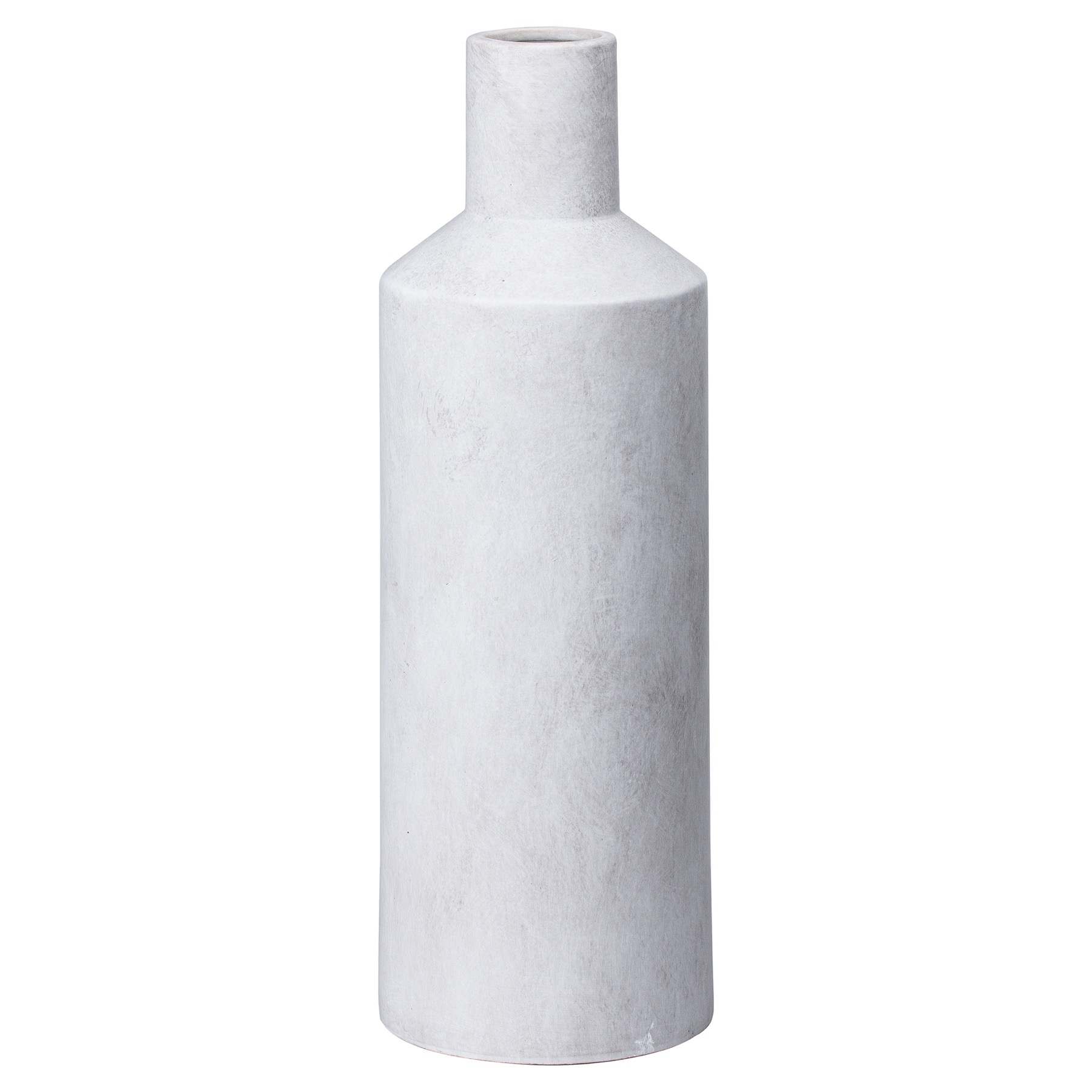 Darcy Sutra Large Vase
£55.99
Darcy Sutra Large Vase
£55.99
Pros of stone vases
- Real weight. Stone vases feel substantial. Lighter ceramics can read as 'props'; stone reads as permanent
- Natural variation. Each piece is one of a kind. The banding is unrepeatable
- Age beautifully. Stone develops a subtle patina over years of being handled. Small marks become part of the character
- Quietly luxurious. Without trying. The material does the work
- Pair brilliantly with warm wood. The cool grey-beige tones of travertine balance the warmth of oak and linen
Cons of stone vases
- Heavy. Difficult to move once placed
- Porous. Most stone vases need a glass or metal liner inside for fresh water — water can stain unsealed stone
- Cost more. Real stone is more expensive than ceramic for the same size
- Sensitive to acid. Don't clean with lemon, vinegar, or harsh cleaners — they can etch the surface
- Chip if dropped. The same density that gives them character makes them brittle at the edges
Ceramic vases — what they are
Ceramic vases are shaped from clay (typically stoneware or porcelain), fired at high temperature, and finished with a glaze. The hand-thrown ones — shaped on a wheel or hand-built — have variation across pieces; mass-produced slip-cast ceramics are uniform.
Quality ceramic vases use matte rather than glossy glazes — chalk-white, soft sand, deep clay, faded sage. The matte finish feels closer to natural stone than glossy ceramic does.
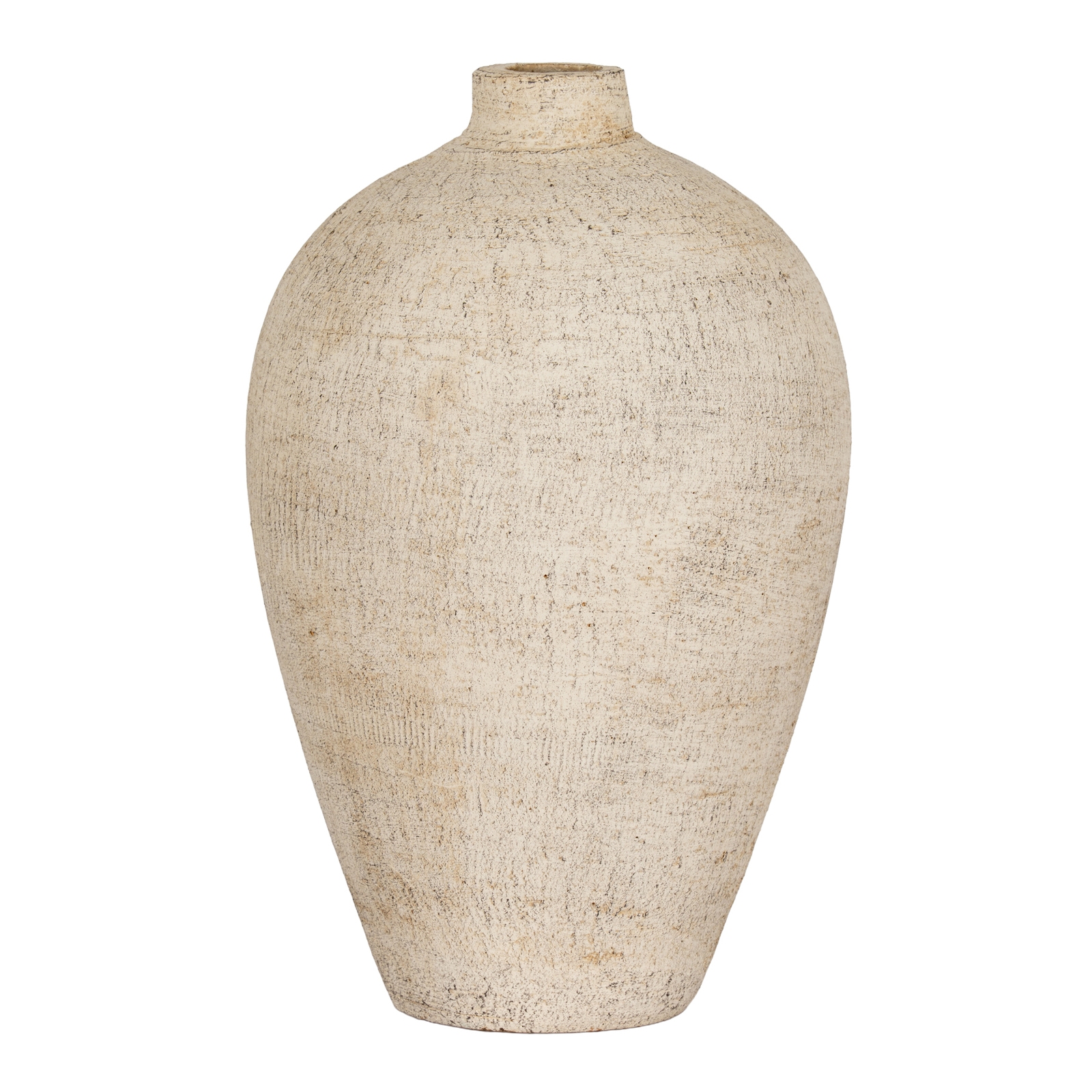 Morrow Medium Vase
£40.99
Morrow Medium Vase
£40.99
Pros of ceramic vases
- Lighter and easier to move. Practical when you want to reposition arrangements
- Watertight. Most quality stoneware ceramic can hold fresh water without lining
- Wider range of forms. Ceramic can be hand-shaped into more variations than stone allows
- Group beautifully. Three ceramic vases of different heights and similar glaze tones read as a considered set
- Cost less. Hand-finished ceramic is significantly cheaper than equivalent natural stone
- Hardier in practice. Less brittle than stone — chips happen but recover better
Cons of ceramic vases
- Lighter feel. Can read as less substantial than stone
- Less natural variation. Even hand-thrown ceramics within a series look similar; stone is always unique
- Crack if dropped. Less forgiving than stone in this specific scenario
Side-by-side comparison
| Stone | Ceramic | |
|---|---|---|
| Weight (medium vase) | 2–5kg | 0.5–2kg |
| Holds fresh water | Needs liner | Usually yes |
| Variation between pieces | Unique each time | Similar within a series |
| Best for fresh flowers | With liner only | Direct |
| Best for dried stems | Excellent | Excellent |
| Cost (medium) | £50–150 | £40–90 |
| Suits Scandi | Some pieces | Yes |
| Suits Japandi | Particularly | Yes |
| Hardy with kids/pets | Stable (heavy) | Less stable |
Which suits your home?
Stone if:
- You're drawn to Japandi or wabi-sabi aesthetics
- You want one statement piece that anchors a room
- You use dried stems more than fresh flowers
- You have heavy wood furniture that needs balancing weight
- Your palette leans cool — greys, sand, soft white
Ceramic if:
- You're drawn to Scandi or hygge aesthetics
- You like to group multiple vases together
- You change arrangements frequently with fresh flowers
- Your palette leans warm — cream, terracotta, soft clay
- You're on a tighter budget but want considered material
Mixing stone and ceramic
The honest answer: they look excellent together. A heavy travertine vase paired with two smaller hand-thrown ceramic vases on a sideboard creates depth and weight variation that all-ceramic or all-stone groupings can't achieve.
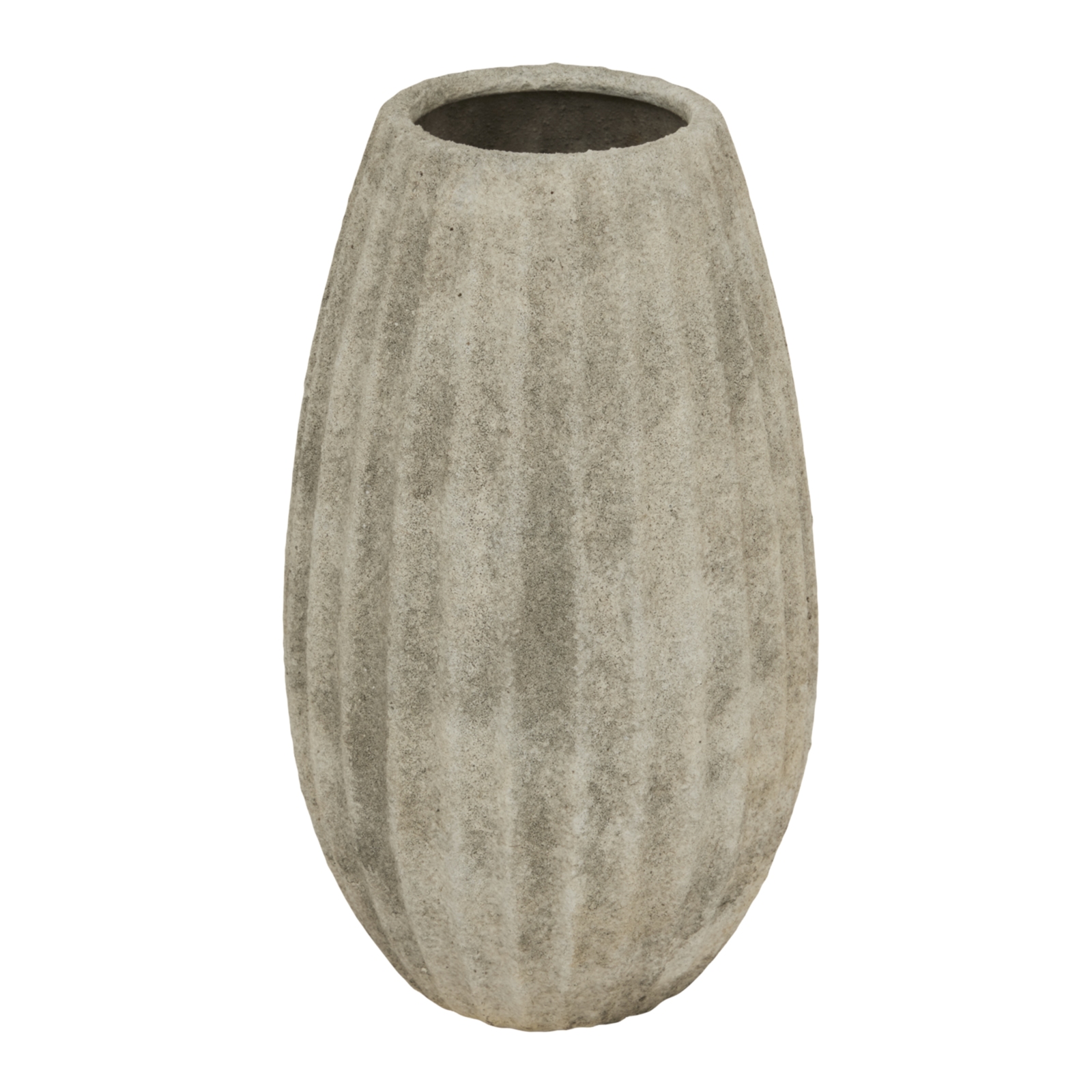 Catania Medium Olpe Vase
The rule for mixing: keep all pieces in a similar tonal family. A bright white ceramic next to a warm grey travertine reads as mismatched. The same ceramic in soft cream next to the same travertine reads as a curated set.
Where to use each
Stone vases work best:
- On a wide console as a single statement
- On a low coffee table where their weight feels right against a sofa
- On a hearth as a single tall piece with one dried branch
- On a sideboard as the anchoring central piece in a group
Ceramic vases work best:
- On a dining table as a low centrepiece
- On a bedside in pairs flanking the bed
- On a kitchen shelf holding fresh herbs or seasonal stems
- Grouped in threes on a wide shelf or sideboard
How to style either material
One vase, one stem
The simplest and most powerful arrangement. A single tall vase with one dried branch is calm, sculptural, easy. Works for stone and ceramic alike.
Three vases, three heights
Group three vases of different heights but similar tones. Pair with a single short stem in the tallest, a fuller arrangement in the middle, nothing in the lowest. Best with ceramic for the variety; stone is harder to find in matching tones.
One vase, generous bunch
A wide-bellied vase with a generous bunch of pampas, eucalyptus or seasonal flowers. Best with ceramic that can hold water for fresh stems.
Common questions
Are travertine vases the same as marble?
No. Both are limestone but formed differently. Travertine is sedimentary with horizontal banding; marble is metamorphic with veined patterns. Travertine is more organic; marble more formal.
Can I put fresh flowers in a stone vase?
Only with a liner. Stone is porous — water seeping into the stone can leave permanent staining over time. Most quality stone vases come with a removable glass or metal water-holding insert.
Do ceramic vases crack with cold water?
No — quality stoneware ceramic is fired at temperatures over 1200°C and is completely watertight and frost-resistant for indoor use. Don't put a hot ceramic vase straight into cold water though — sudden temperature change can crack glaze.
What's the most versatile vase shape?
A wide-bellied medium vase (around 25cm tall, 15cm wide). It holds fresh arrangements, dried bouquets, single tall stems and stands well empty.
How many vases does a home need?
Most considered homes have 3–6 vases of different sizes. One tall (40cm+) for floor or console moments. Two medium (20–30cm) for sideboards or dining tables. One or two bud vases (under 15cm) for bedside or single-stem moments.
Whatever you choose, choose less rather than more. One excellent vase outperforms three mediocre ones. Browse our full vase and stem collection.
Free UK delivery on orders over £75. Browse the latest arrivals or shop by category from the main menu.