A well-placed wall mirror does three things at once: it adds light, it adds depth, and it adds a moment of focus to a wall. A poorly-placed one does none of those — it just reflects an unflattering view of the ceiling, or sits too high to ever look into. The difference is entirely down to getting height and size right.
The right height — the gallery rule
For most rooms, the centre of a mirror should sit at 145–155cm from the floor. This is gallery standard — it's the height museums hang artwork, because it works for most adult eye-lines.
If the mirror is going above furniture (a console, dresser, fireplace, sideboard), the rule changes slightly: leave 15–25cm of clear wall between the top of the furniture and the bottom of the mirror. Hanging it too close to the furniture makes the wall feel cramped.
The right size
A mirror should be roughly two-thirds the width of the furniture beneath it. A 120cm-wide console takes a mirror 70–90cm wide. A 1.5m mantelpiece takes a mirror around 1m wide.
For mirrors hung in isolation (no furniture below), choose the size to suit the wall — a mirror should fill about 50–60% of the visible wall area for impact, less if you want it to read as accent rather than statement.
Mirror placement by room
Hallway
The most useful room for a mirror. A hallway mirror brightens the entry to the home, reflects light deeper into the space, and gives you a final look before leaving the house.
Hang above a console table at gallery height. Round mirrors are particularly good in hallways — they soften the right angles of doorframes and skirting. Arched mirrors give a quiet architectural moment.
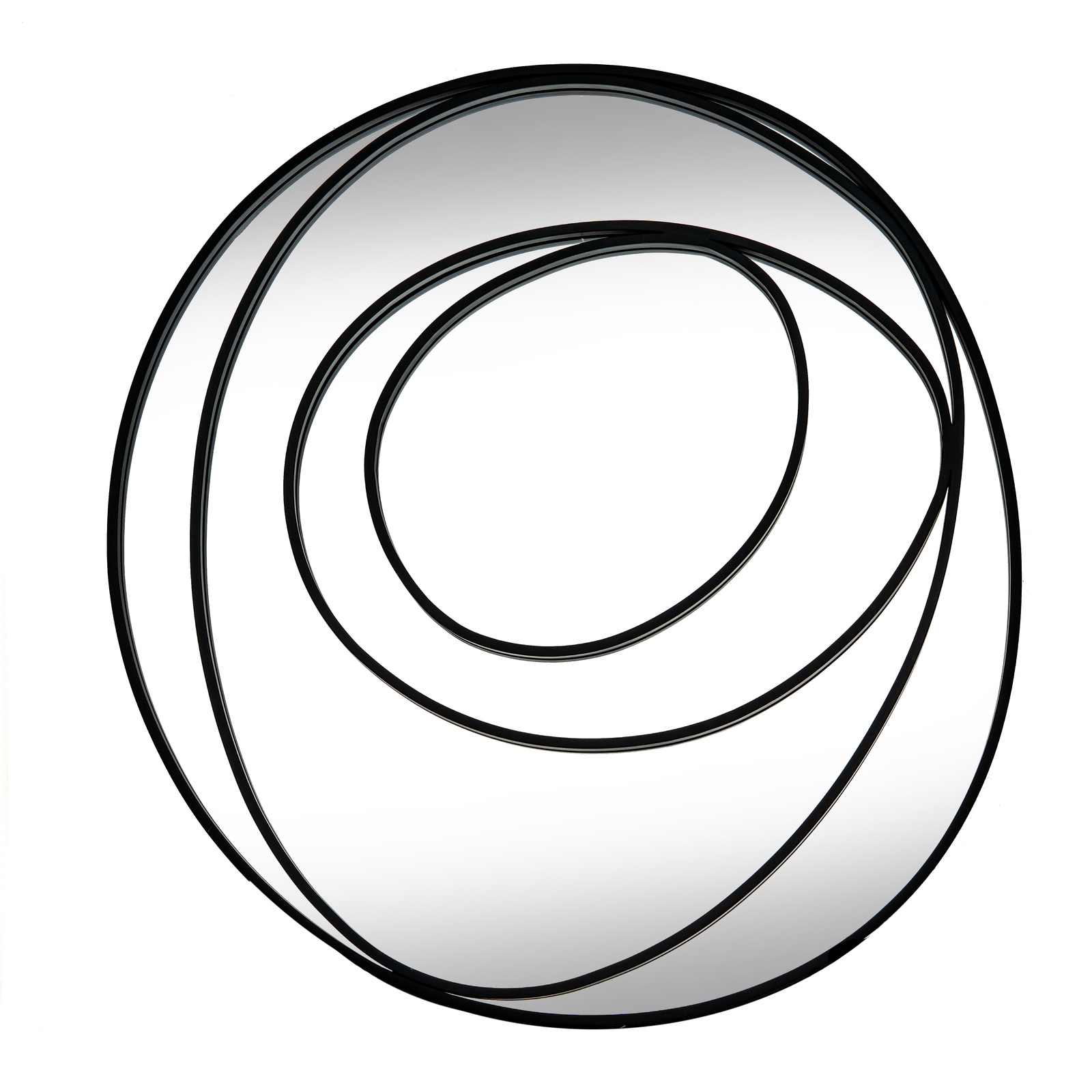 Brisa Swirl Mirror
£204.99
Brisa Swirl Mirror
£204.99
Bedroom
Bedroom mirrors should be functional (you can see yourself) and quiet (they shouldn't dominate). Common placements:
- Above a chest of drawers — gallery height as standard
- Above the bed — only if you can deal with the slight feng-shui awkwardness. Many prefer artwork above the bed instead
- Leaning full-length against a wall — for getting dressed in front of
- Above a dressing table — round or arched works best, sized to suit
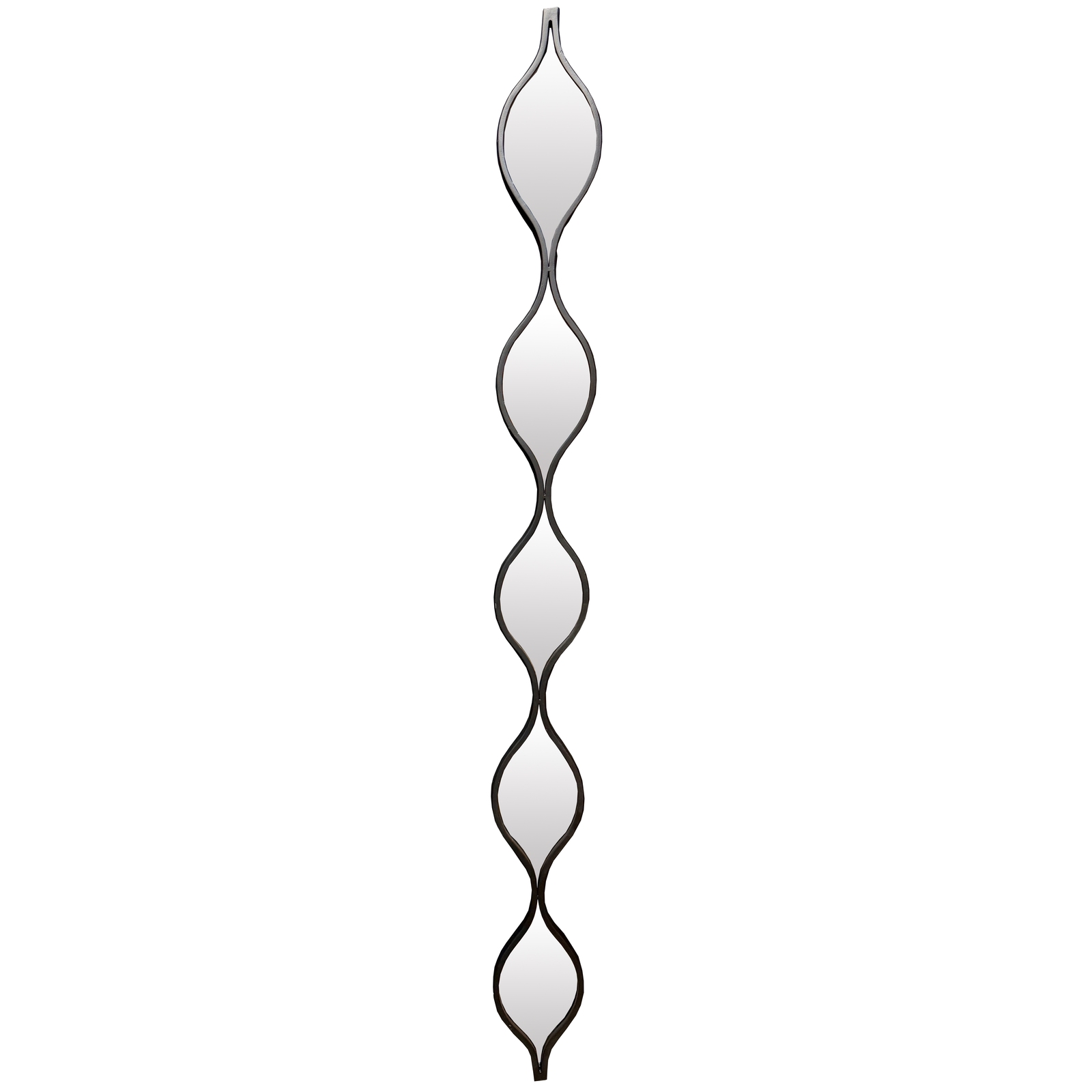 Decorative Hanging Black Mirror
£65.99
Decorative Hanging Black Mirror
£65.99
Bathroom
Above the basin is the obvious placement. A round mirror above a rectangular vanity is a classic Scandi pairing — the geometry softens the room. Size: roughly the width of the basin itself.
For separate WCs or smaller bathrooms, a smaller round mirror at eye-level adds light without dominating.
Living room
Above a fireplace is the traditional placement. A mirror here reflects the room and the natural light from windows opposite. Choose larger rather than smaller — fireplace mirrors are statement pieces.
Other living room options: leaning a large mirror against a wall in a corner (modern and informal), or hanging a mirror opposite a window to bounce daylight deeper into the room.
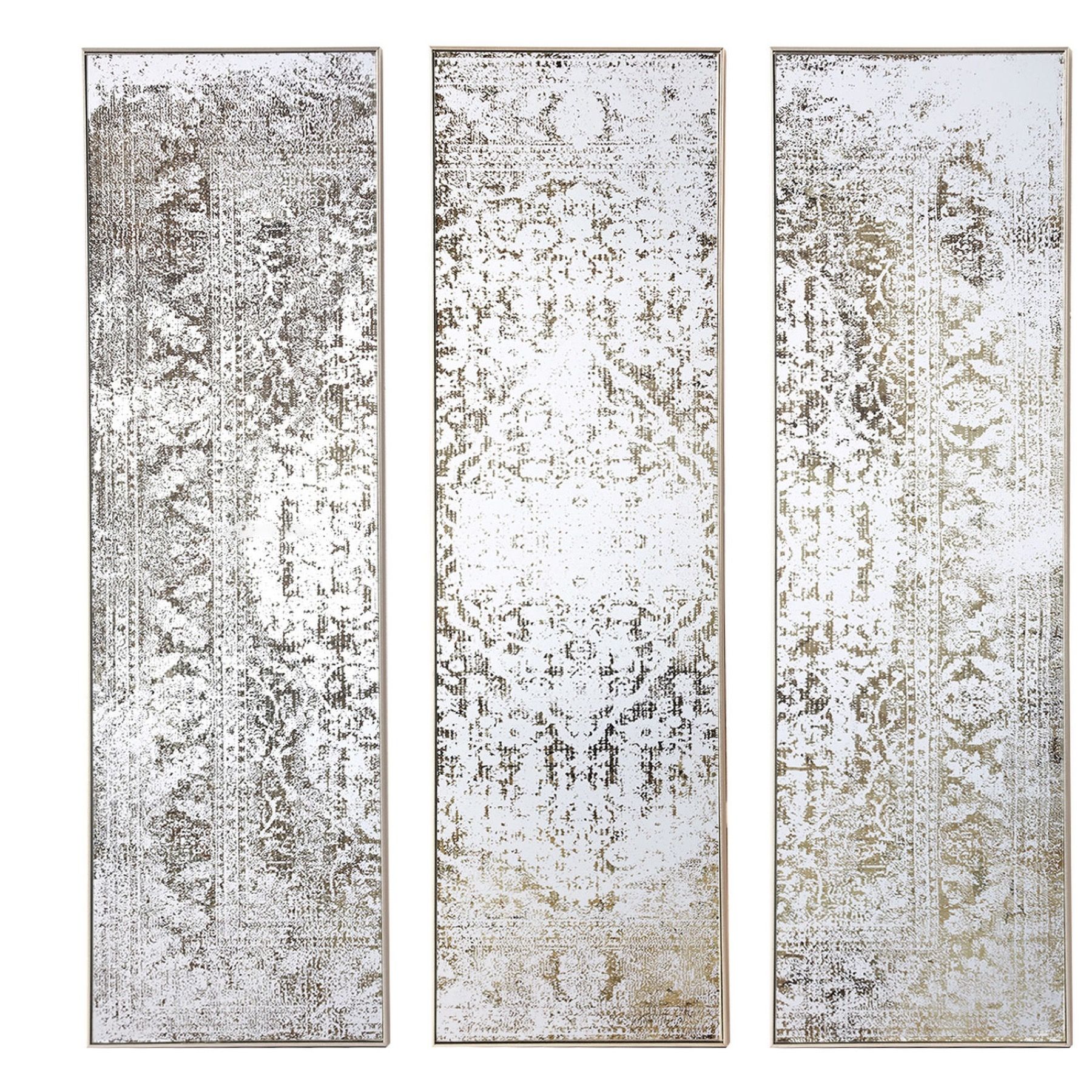 Antique Etched Trio of Wall Mirrors
£251.99
Antique Etched Trio of Wall Mirrors
£251.99
Dining room
Dining rooms often benefit from a mirror opposite the window — it brightens evening meals and makes the room feel larger. Centre above a sideboard or hang as the focal point on a feature wall.
Choosing the right shape
Round mirrors
The most versatile shape. Round mirrors soften a wall of straight lines (doorframes, skirting, picture rails). Particularly good in hallways, bathrooms, and above consoles. Browse round mirrors.
Arched mirrors
The shape of an old window or doorway. Brings quiet architectural reference. Particularly good in entryways, on panelled walls, and above dressing tables. Browse arched mirrors.
Rectangular mirrors
The most functional shape (you can see yourself easily). Common above mantelpieces, sideboards and long consoles. Less visually interesting than round or arched.
Irregular / organic mirrors
Sculpture-led mirrors with curved or asymmetric edges. Statement pieces — one in a room is usually enough. Best in modern or Japandi interiors where they read as art.
How to actually hang it
1. Find the right height and mark it lightly with pencil
Mark the spot where the centre of the mirror will sit. Use a tape measure and pencil — not just your eye.
2. Measure the hanging point on the back of the mirror
Most mirrors have a D-ring, hook or wire on the back. Measure the distance from the top of the mirror down to where that hanging point sits. Subtract that distance from your centre-line on the wall to find where the nail / fixing should go.
3. Check what's behind the wall
For mirrors under 5kg, a hammer and nail is fine on plasterboard. For mirrors over 5kg, use a wall anchor — and for solid masonry walls, a drill and wallplug. Heavy stone-framed mirrors should always be fixed into a stud or properly plugged into masonry.
4. Check it's level before stepping back
A spirit level on the top of the mirror takes ten seconds and saves a tilted hang.
5. Sit and look at it from across the room
Photographs and seating angles matter more than how it looks while standing right next to it. Always check from at least 2m away.
Mistakes to avoid
Hanging too high
The single most common mistake. UK homeowners tend to over-hang mirrors — the natural instinct is to centre on the wall, but most walls are taller than the eye-line they need to suit. Stick to 145–155cm centre as standard.
Mirror too small for the furniture
A 40cm round mirror above a 1.5m console looks lost. Two-thirds the width of the surface beneath is a hard rule worth following.
Reflecting nothing
A mirror that reflects a blank wall is doing nothing. Position to reflect light, a window, or a considered moment (a sideboard with a vase, a tall plant) — never a blank surface.
Wrong shape for the room
An ornate gilt-framed mirror in a Japandi bedroom is jarring. A minimal round mirror in a Victorian rococo dining room is jarring. The mirror should sit within the language of the room.
Common questions
How high should I hang a mirror over a console?
Centre at 145–155cm from the floor, OR 15–25cm above the top of the console — whichever feels more natural for your room height.
Can I hang a mirror without drilling?
Yes — Command strips work for mirrors under 3kg. Above that, you need a proper fixing. Heavy stone or metal-framed mirrors should always be drilled in.
Round or arched for the hallway?
Round if your hallway has lots of straight lines you want to soften (doorframes, picture rails, geometric flooring). Arched if you have a more architectural hallway or want to introduce a softer "window" shape.
Can I hang a mirror opposite a window?
Yes — this is one of the best uses of a mirror. It bounces natural daylight deeper into the room and effectively doubles the light during the day.
What size mirror for above a fireplace?
Roughly the width of the mantelpiece itself, or slightly narrower. Height should fill 50–70% of the wall above the mantel.
Once you've nailed the height and size, the rest of the decision is purely aesthetic. Browse our mirror collection for round, arched and sculptural options.
Free UK delivery on orders over £75. Browse the latest arrivals or shop by category from the main menu.