The words "cheese board" and "charcuterie board" get used interchangeably in UK kitchens, but they originally meant slightly different things. Knowing the difference matters less for everyday use than for choosing the right board to buy — and for hosting properly when it matters.
The traditional distinction
Charcuterie board: French term, traditionally long and narrow, designed for cured meats laid out in lines. The word "charcuterie" specifically means cured meat products — salami, prosciutto, jamón, terrines.
Cheese board: Wider, often square or round, built for wedges of cheese with space around each for crackers and accompaniments. Traditionally wood, sometimes marble or slate.
Serving board: A more flexible term covering anything in between — wide enough for cheese, long enough for charcuterie, designed for shared meals broadly.
In practice, most modern UK boards are dual-purpose. A good board holds cheese, meat, fruit, crackers and small bowls of preserves equally well.
What goes on a proper cheese board
Three to five cheeses, chosen for variety:
- One hard cheese — aged cheddar, manchego, gruyère, parmesan
- One soft cheese — brie, camembert, taleggio
- One blue cheese — stilton, gorgonzola, roquefort
- One semi-soft or specialty — époisses, comté, goat's cheese
- Optional: a fresh cheese — burrata, mozzarella, ricotta
Accompaniments:
- Crackers (plain water biscuits + something seedy)
- Sliced baguette
- Fresh fruit — grapes, fig wedges, pear slices
- Dried fruit — apricots, dates
- Honey or fig jam in a small bowl
- Chutney or pickles
- Nuts (walnuts, almonds)
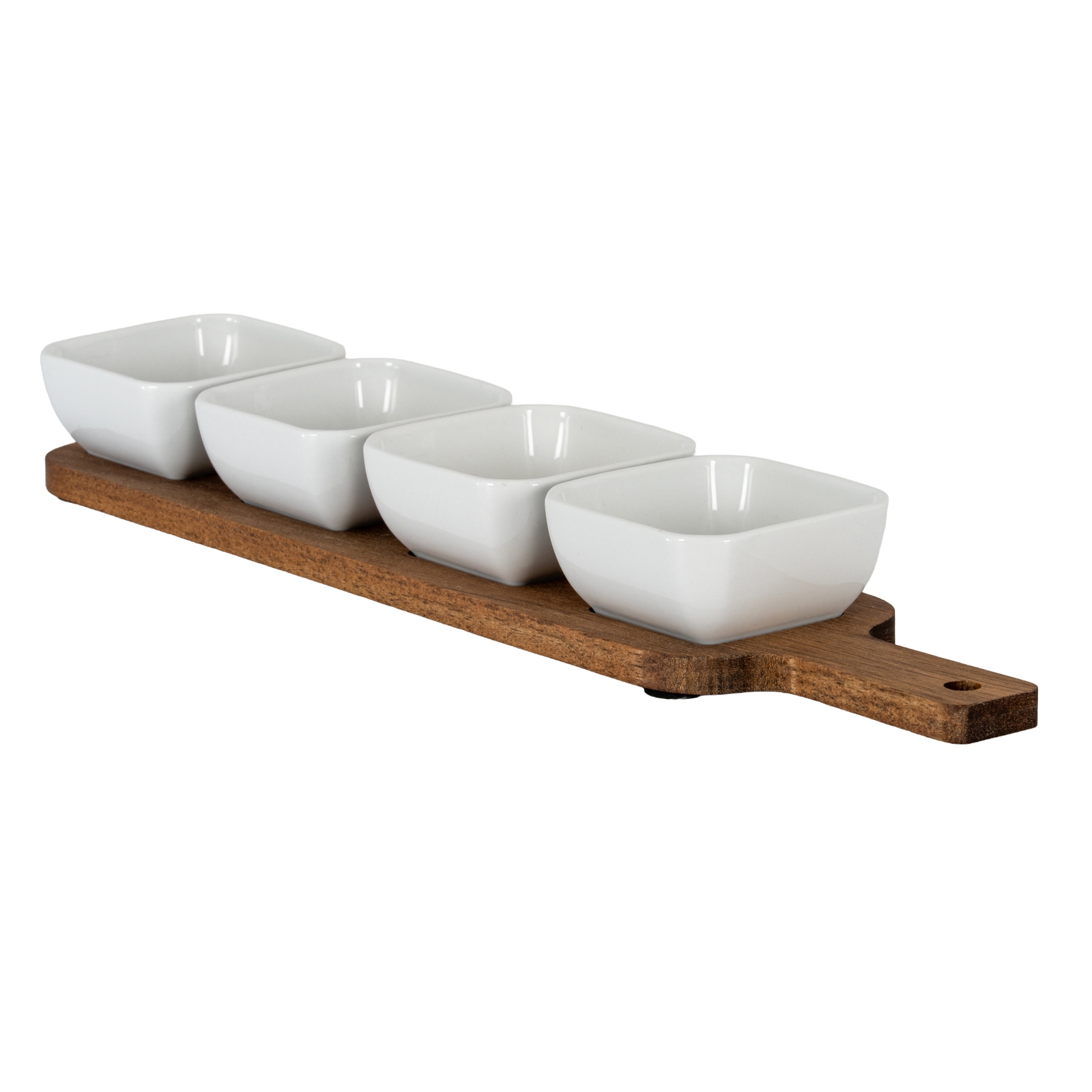 Acacia Serving Board with Four Ceramic Bowls
£22.99
Acacia Serving Board with Four Ceramic Bowls
£22.99
What goes on a proper charcuterie board
Three to five cured meats, chosen for texture and flavour variety:
- One sliced thin and silky — prosciutto, jamón serrano, bresaola
- One sliced thick and chewy — salami, finocchiona, soppressata
- One pâté or terrine — chicken liver, rabbit, duck
- One specialty — coppa, n'duja, chorizo, saucisson
Accompaniments:
- Sliced baguette
- Crackers (less essential than for cheese)
- Cornichons / pickled onions
- Olives (mixed)
- Wholegrain mustard
- A small wedge of soft cheese (yes — a touch of cheese on a charcuterie board is welcome)
- Fresh fig slices or dried fig
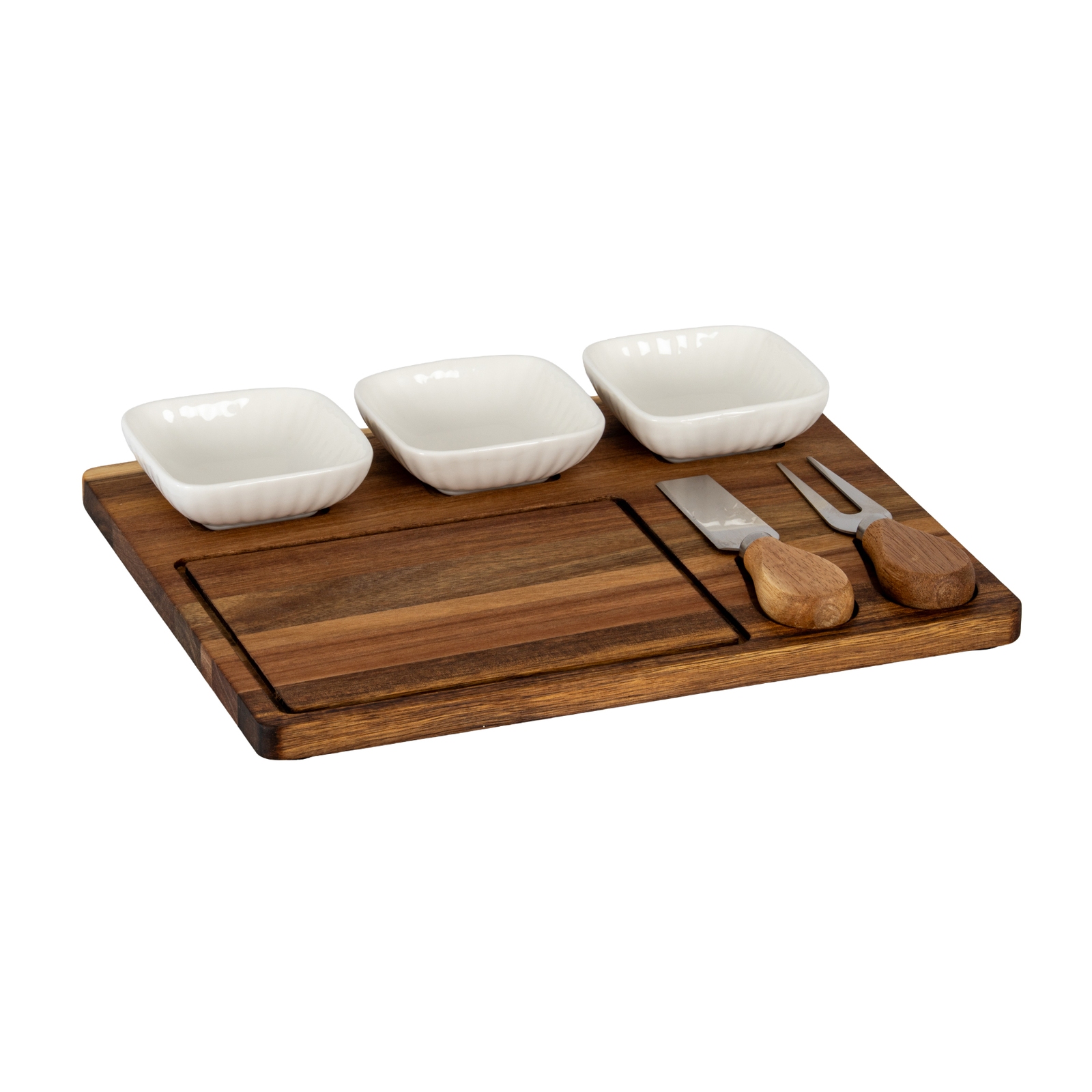 Acacia Cheese Board Set with White Ceramic Bowls and Cutlery
£29.99
Acacia Cheese Board Set with White Ceramic Bowls and Cutlery
£29.99
Choosing the right board material
Acacia or oak wood
The most versatile choice. Hardwoods hold cheese well and develop a soft patina with use. Acacia is increasingly popular for its rich grain; oak is the traditional Scandi favourite.
Care: wipe with damp cloth, re-oil with mineral oil or beeswax every 1-3 months, never put in the dishwasher.
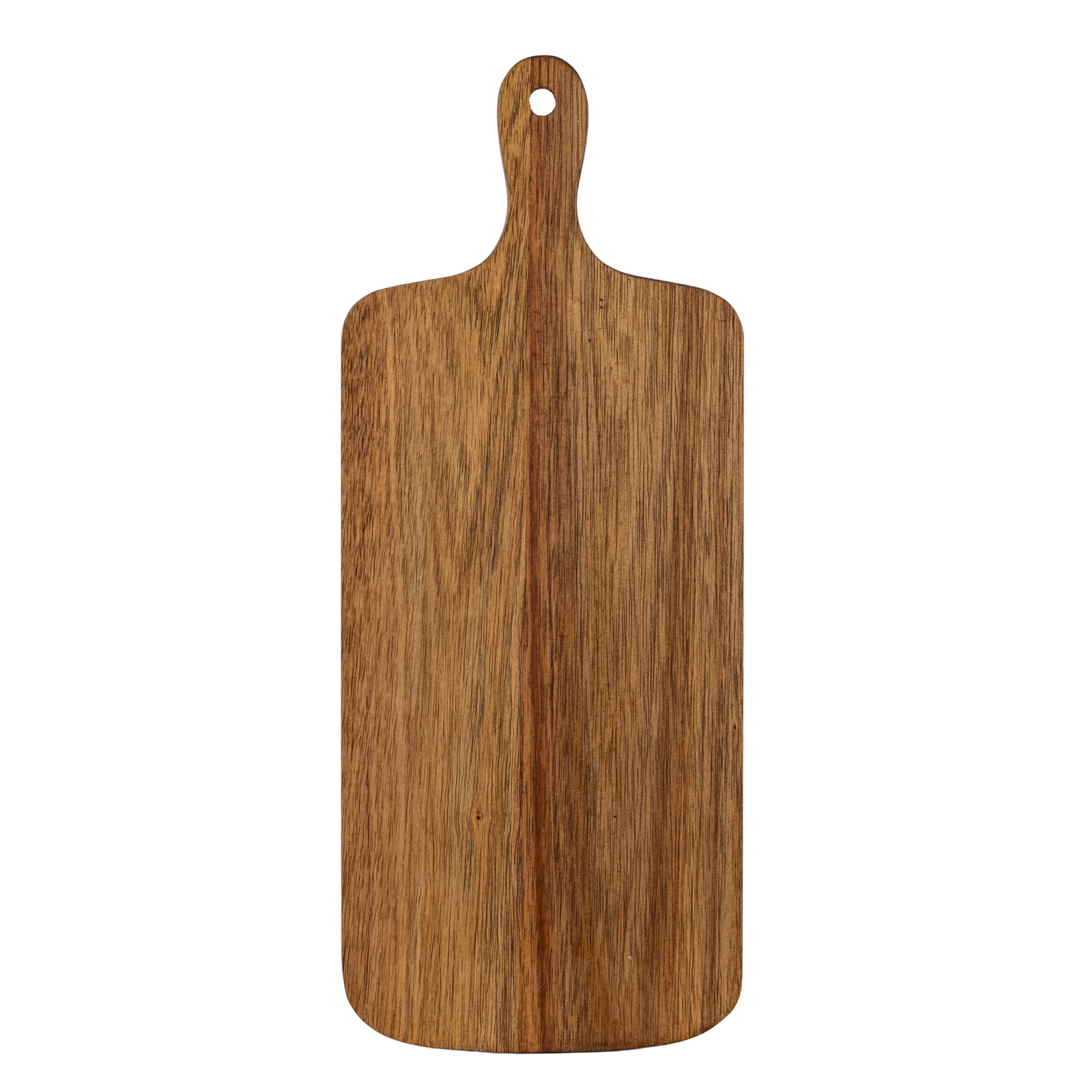 Small Rectangular Acacia Serving Board
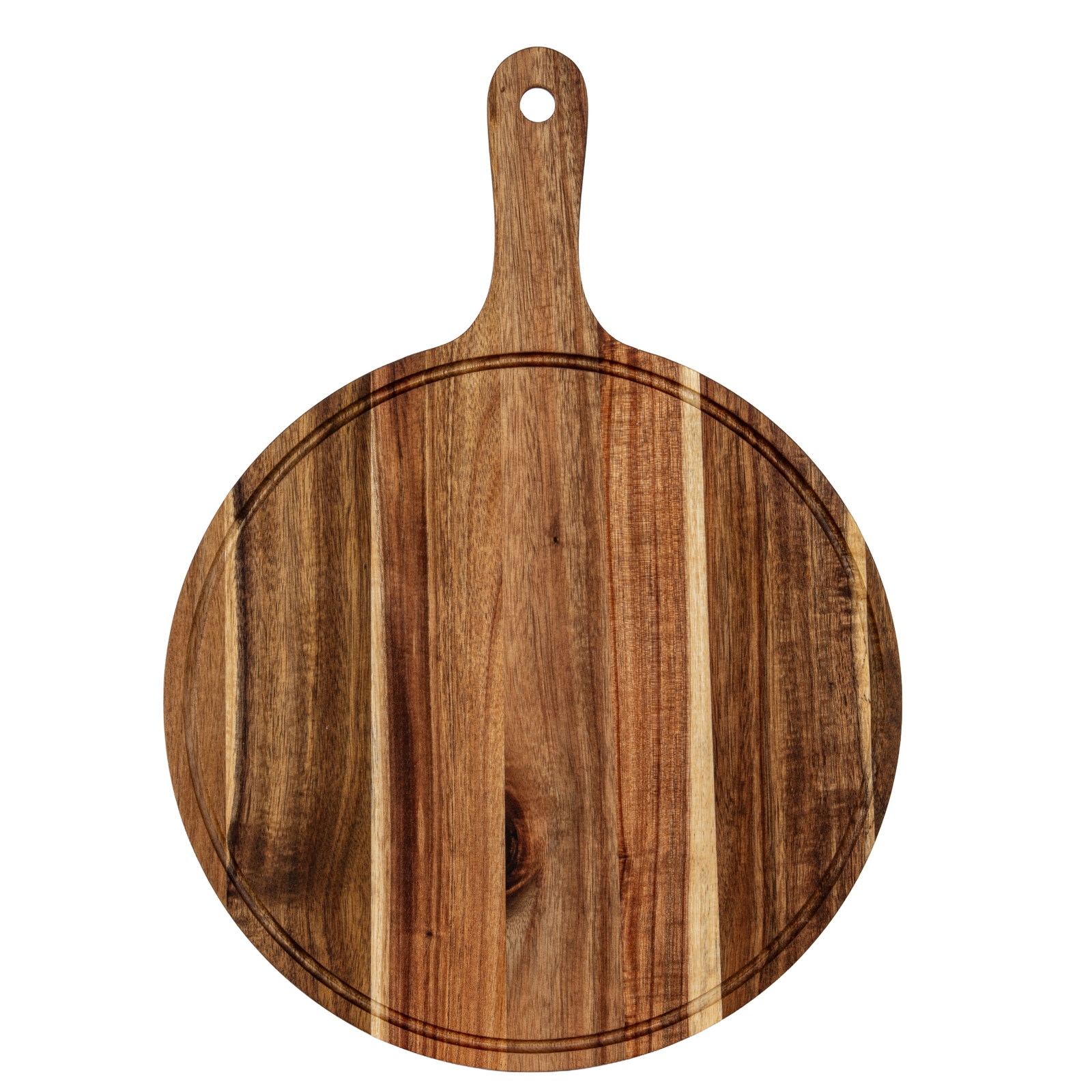 Round Acacia Serving Board
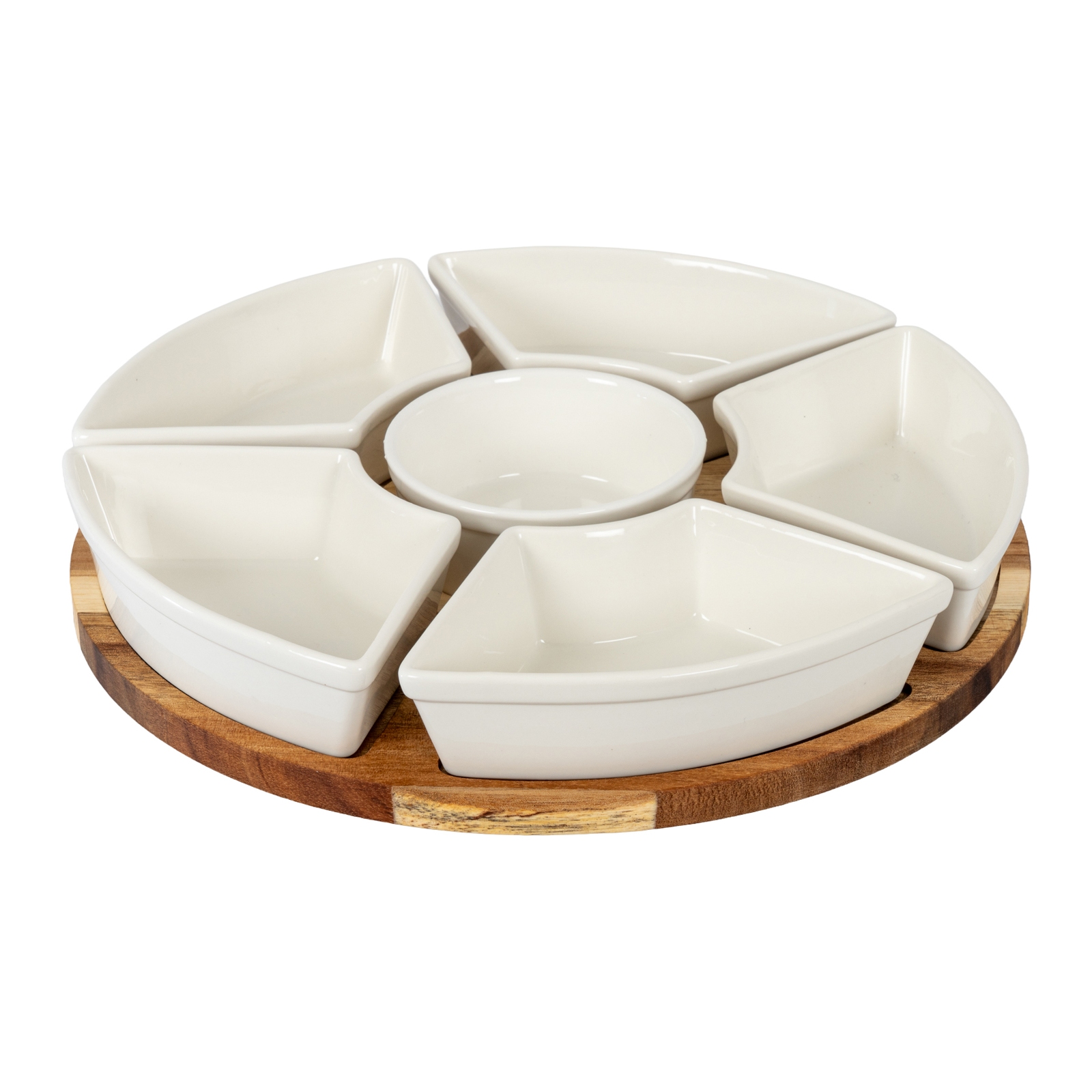 Acacia Lazy Susan with Ceramic Serving Bowls
Marble
Cool to the touch — particularly good for cheese because the cool surface keeps soft cheeses at temperature. Less practical for cured meats.
Care: wipe with damp cloth, avoid acidic cleaners, never put a hot pot directly onto marble.
Slate
Naturally cool like marble. Dark grey-black gives strong visual contrast against pale cheeses and meats. Slightly more rustic feel than marble.
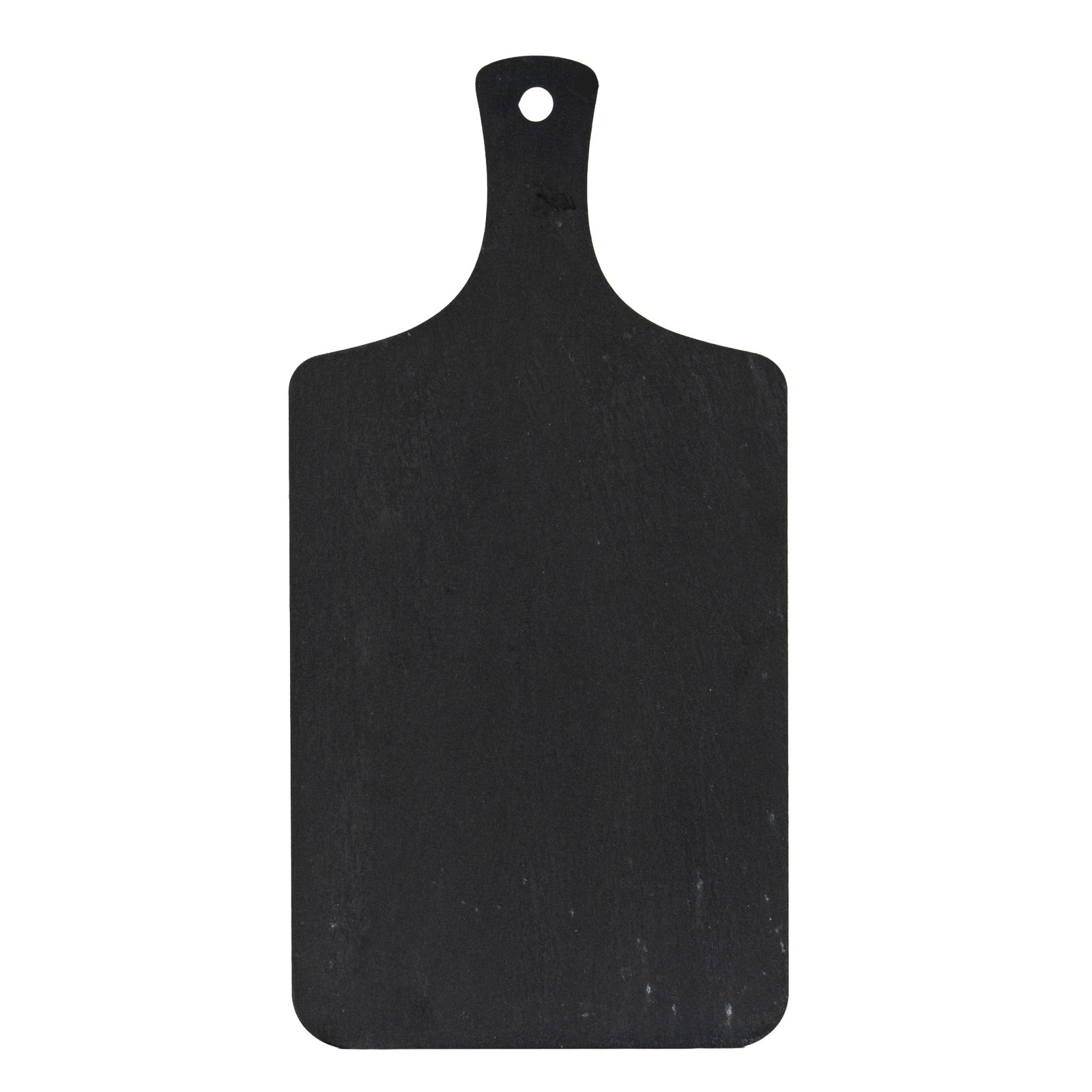 Rectangular Slate Serving Board
£14.99
Rectangular Slate Serving Board
£14.99
Ceramic
Less common but useful for warmer dishes — antipasti with warm bread, mezze platters, anything that's been recently cooked.
Sizing your board
For 2 people: A small rectangular or round board, 25-30cm long. Cheese for two and a few accompaniments.
For 4-6 people: A medium board, 35-50cm long. The standard household entertaining size.
For 8+ people: A long board (50cm+) or a lazy Susan setup that lets everyone reach.
For ongoing use rather than entertaining, a medium board is the right buy. Long boards only earn their place if you regularly host larger groups.
The art of arrangement
The Instagram-grade cheese board has visual rules:
Rule 1: Place cheeses first, evenly spaced
Distribute cheeses at the four "corners" of an imaginary diamond on the board. Leave space between each for accompaniments.
Rule 2: Fan or fold meats artfully
Don't pile meats flat. Fan them in arcs, fold prosciutto into soft waves, or roll salami into loose roses. The visual texture matters.
Rule 3: Fill gaps with bowls and small items
Small ceramic bowls of honey, mustard, chutney sit between cheeses. Olives, nuts, dried fruit fill the remaining gaps. Nothing should sit alone — every cheese should touch at least one accompaniment.
Rule 4: Add fresh greenery for colour
A sprig of rosemary tucked behind the cheeses. Fresh fig leaves under the meats. Sliced fruit (fig, pear) for organic shapes and colour.
Rule 5: Cut some cheese in advance
Cut a few wedges and slices of each cheese before guests arrive. Leaves the rest whole for visual impact. This is the most-missed step.
Drinks pairing
The simple guide:
- Hard cheese — full-bodied red wine, aged port, dark beer
- Soft cheese — sparkling wine, dry white, light red
- Blue cheese — sweet wine (sauternes, port), strong dark beer
- Charcuterie — medium red wine, dry rosé, pilsner-style beer
- Mixed board — sparkling wine works with everything; if one wine for the whole board, a medium red like a Beaujolais
Common mistakes
Serving cheese cold from the fridge
Take cheese out 30-60 minutes before serving. Cold cheese has muted flavour and rubbery texture.
Pre-cutting all the cheese
Cut only some — leave whole wedges for guests to slice themselves. Whole cheese keeps better at table temperature too.
Too many cheeses
Three excellent cheeses beat seven mediocre ones. Quality over variety.
Forgetting the bread/cracker base
Without good bread or crackers, even excellent cheese doesn't shine. Don't skimp on this.
Using one cheese knife for everything
Different cheeses need different knives — a hard cheese chisel for parmesan, a soft cheese knife for brie, a forked knife for crumbly blue. Most board sets come with three or four — use them.
Common questions
How much cheese per person?
50-75g per person as a starter or accompaniment. 100-150g per person if it's the main meal.
Should cheese go on the board with the rind?
Yes — leave rinds on. Guests choose whether to eat them.
How long can cheese sit out?
2-3 hours at typical room temperature. Wrap and refrigerate leftovers afterwards.
Can I prep a cheese board in advance?
Build the board 30-45 minutes before serving. Cover loosely with a clean cloth. Don't refrigerate — the cheese needs to warm.
What's a good first board to buy?
A medium acacia board (35-40cm) with a small ceramic bowl set. Versatile for cheese, charcuterie and everything in between. Around £30-60.
Whatever you call it, a well-made board is one of the most-used pieces in a hosting kitchen. Browse our serving boards for considered options.
Free UK delivery on orders over £75. Browse the latest arrivals or shop by category from the main menu.